A strike is the last resort, when workers feel they have no other way to make their employers listen.
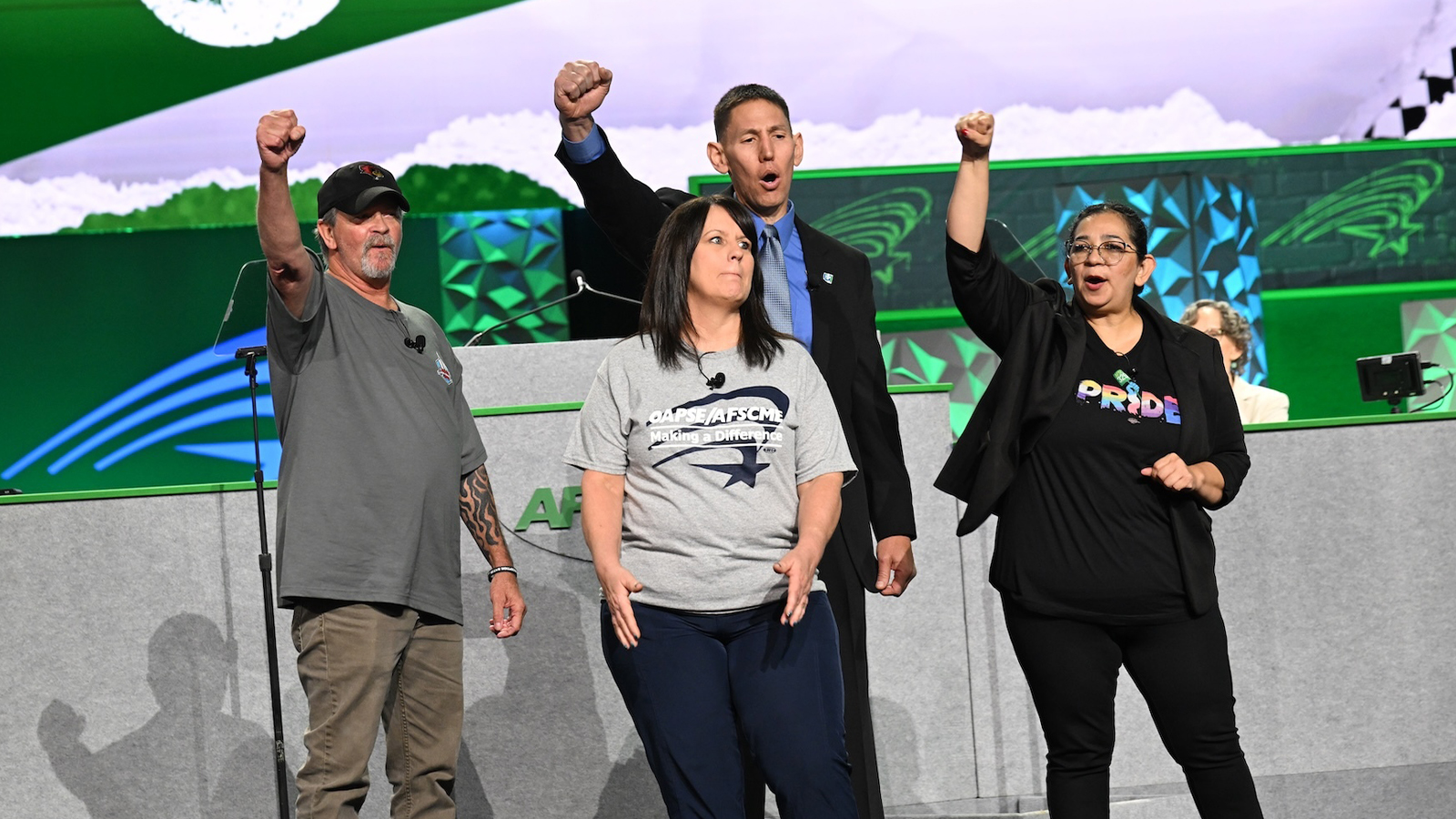
It’s never a decision made lightly. For the AFSCME members who spoke Tuesday at the AFSCME 47th International Convention in Chicago about their decision to strike — to put everything on the line — that decision paid off.
Chuck Carver, a building services worker at Illinois State University and a member of Council 31, went on strike this year when the university refused to give workers the raises that reflected the value they bring to the university.
He described the support that he and members of his local received from the university community, including a concerned student who provided him with snacks while on the strike line.
“All this support carried us through four weeks on strike and brought management back to the table. We won a contract with raises that kept us on pace with the rest of campus, and contract language that protects our bargaining rights,” Carver said.
Brian Nitta, a physical therapist and member of UNAC/UHCP from California, was one of 32,000 Kaiser Permanente health care workers who went on strike for better patient care.
“Kaiser pushed us to do more with less, treating health care like an assembly line. But when you rush care, people don’t heal as quickly,” said Nitta. “I walked those lines for countless hours straight. … It was the largest open-ended strike of health care professionals in U.S. history. We did that, AFSCME family. We. Made. History.”
They won a contract that gave them the resources they needed to staff up.
For Monica Martinez, a clinical care partner at UCLA Medical and member of Local 3299, the skyrocketing cost of housing was a major reason she and her co-workers threatened a strike.
“Many of my co-workers have been forced to move out of town because they can’t afford housing in LA. Some commute for hours. Others sleep in the UC parking lot between shifts because the drive home and back would take too long. We often say we’re just two paychecks away from homelessness,” Martinez said.
The threat of a strike was enough for the workers who keep the University of California system to secure a robust contract with record raises. UCLA management came to the table in the nick of time and Local 3299 workers called off their strike.
Lori Coates, a member of OAPSE and a school custodian in Ohio, described how community solidarity during a strike can make all the difference.
“When I first showed up to the picket line on that freezing winter day, I realized we weren’t alone. Neighbors brought us coffee, friends and family delivered hot meals, and parents honked in support. Students even came to walk beside us after school,” Coates said.
She and her co-workers came away from that strike with a new contract that saved her health care and provided much-needed raises.
These members’ stories embody the power of solidarity and show that together as a union, we can overcome even the toughest odds.